
A collision with a commercial truck is unlike any other crash on Philadelphia roads. A fully loaded semi-trailer is typically as tall as 14 feet high and weighs around 80,000 pounds. That level of size and weight means the damage to smaller vehicles is often catastrophic. This also means that the legal and logistical aftermath is far more complicated than a typical fender-bender. If you or a family member has just experienced a collision with a commercial truck in Philadelphia, the decisions you make in the first hours and days can have a profound effect on your health, your safety, and your ability to recover fair compensation.
This guide walks you through every step: from the first two minutes after impact to the weeks that follow. It covers what to do, what to avoid, and why acting quickly and carefully matters in a truck accident case.

Move to safety and prevent a second crash on Philadelphia roads
The first priority after any collision is preventing additional harm. That’s why you should try to move your vehicle off to the side of the road or onto a less busy street. Philadelphia is known for some of the busiest high-speed corridors, such as I-95, the Schuylkill Expressway (I-76), and Roosevelt Boulevard. If your accident occurred on one of these roads, it’s essential to do what you can to avoid secondary crashes. Secondary crashes can occur easily because drivers approaching the scene may not see stopped vehicles quickly enough to brake in time, especially in low-light conditions, curves, or during inclement weather.
The first two minutes after a crash can be critical for several reasons including health and safety of the drivers and passengers involved, as well as legal concerns. Within the first two minutes after the vehicle crash, you should:
1. Check yourself and your passengers for injuries. Don’t move anyone who complains of neck or back pain unless there is an immediate danger.
2. Turn on your hazard lights.
3. If it is physically safe to do so and your vehicle is drivable, move it to the shoulder or a nearby parking area out of active traffic lanes.
4. If you cannot safely move the vehicle or if anyone is trapped or appears seriously injured, do not move. Just stay where you are and stay visible while you wait for first responders.
5. If you are on foot, move to the shoulder or barrier side, away from traffic. Never stand in a live lane to examine damage.
In most cases, you should try to move your vehicle safely to the shoulder or onto a less busy street. But there are times when moving your vehicle would dislodge someone from a seat, worsen a spinal injury, or cause a fuel leak to ignite. In those circumstances, leave everything in place. Your safety and the safety of injured occupants take precedence over clearing the scene.
Call 911 in Philadelphia and Request Police and EMS

Every truck accident in Philadelphia should be reported to 911, even if the damage initially looks minor and even if you don’t feel any serious pain or discomfort.
Victims of truck accidents often don’t think to call 911 and EMS because they don’t feel any acute pain. This is a mistake. They may in fact be very injured and just don’t realize it yet because of the adrenaline pumping through their veins after the shock of the accident. Also, injuries from truck crashes are notorious for delayed onset. In other words, the victim doesn’t feel or notice the injuries right away. Delayed onset is particularly prevalent in cases of soft tissue injuries, concussions, and internal trauma. You may feel fine at the scene and wake up in significant pain the next morning. If you have not called police and EMS, you may not get the critical medical care you need. Another reason to call the police and EMS is so that there will be an official record connecting your injuries to the crash.
Another important reason to call 911 is that Pennsylvania law requires that crashes involving injury, death, or disabling vehicle damage be reported. There is a Pennsylvania statute titled “Immediate notice of accident to police department.” The law mandates that the driver of the vehicle in an accident should notify the police department “immediately by the quickest means of communication” if the accident caused injury or death or if the accident rendered a vehicle undriveable. Calling 911 satisfies that obligation and sets the documentation process in motion from the very beginning.
When you call 911, you should include the following information:
- Your exact location, including cross streets or a highway mile marker. On I-95, I-76, or another highway, mention the direction of travel.
- That the crash involved a commercial truck (adding this specific designation may lead to faster response times).
- Whether anyone appears injured.
- Any hazards at the scene, such as spilled cargo, fuel leaks, or blocked lanes.
- Whether you need emergency medical services (EMS).
A police-generated crash report becomes a critical piece of evidence in your claim, documenting the parties involved, the officer’s observations, any citations issued, and the preliminary determination of fault. Do not leave the scene without confirming that a report will be filed. If you can, make a note on paper or in your phone of the responding officer’s name and badge number so you can follow up later to obtain the crash report.
What to Say (and Not Say) at the Scene to Protect Your Truck Accident Claim
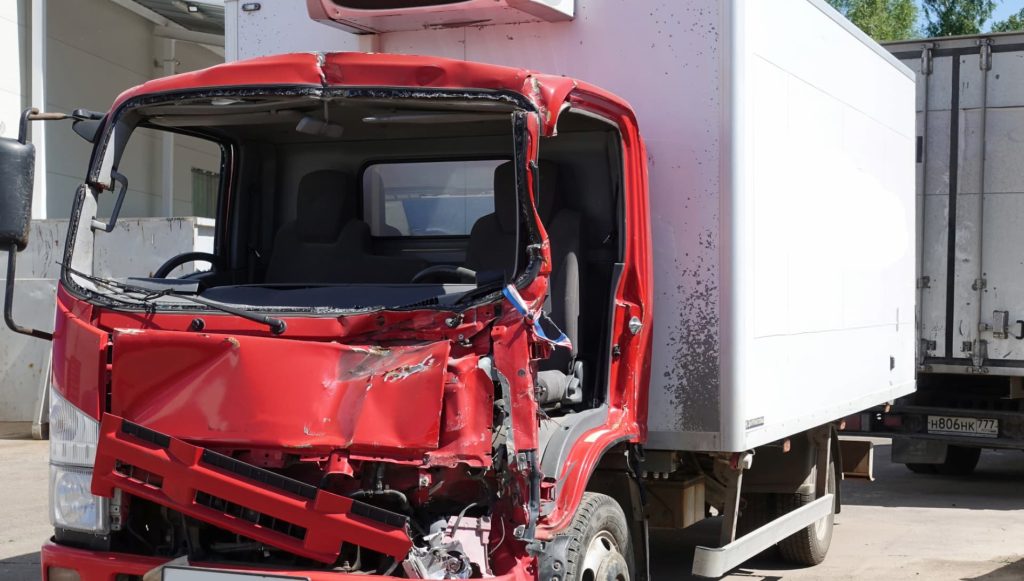
In the aftermath of a crash, it is natural to feel shaken, apologetic, or eager to resolve things quickly. Trucking companies and their insurers know this, and they have systems in place to take advantage of it. A few careless words at the scene can seriously damage your claim later.
What to say to the truck driver:
“Here is my name, contact information, driver’s license number, and insurance information.”
You can and should confirm that police and EMS have been called and are on the way.
Try to limit any additional comments to factual logistics such as “I’ve called 911” and “I will go into my glovebox to get my insurance information.” You can also ask the driver if they are hurt.
Trucking companies employ experienced claims personnel who may arrive at the scene before you have even spoken with your own insurance company. Their job is to protect the carrier’s interests, not yours. Anything you say can and will be documented and used during the claims process. With that in mind, here’s what not to say:
- Do not apologize, even casually. “I’m sorry about this” or “I feel bad that this happened” can be interpreted as an admission of fault.
- Do not speculate about how the crash happened, how fast anyone was going, or what you were doing right before impact.
- Do not discuss responsibility and do not argue about fault with the truck driver, a dispatcher, or a company representative.
- Do not give a recorded statement to anyone at the scene, including a trucking company representative or insurance adjuster who may arrive quickly.
- Do not sign anything at the scene. Some carriers send representatives who may present documents under the guise of “procedure.” You are not obligated to sign anything.
Think of the scene of the accident like the arrests you see on your favorite crime drama: Anything you say can and will be used against you. This is the case in the aftermath of a truck accident.
Photos and video that actually help: damage, road conditions, and the truck’s DOT number
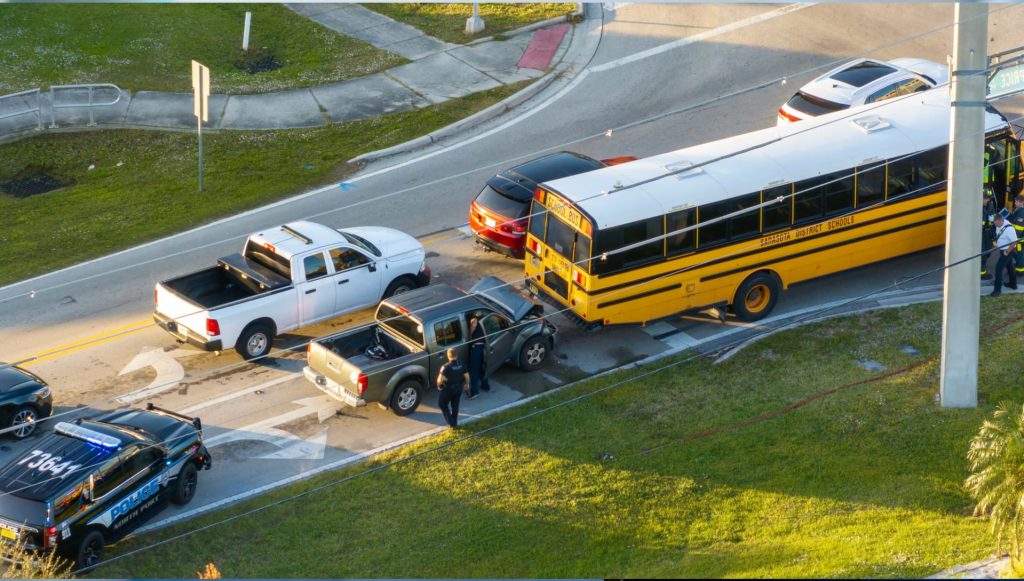
If you are physically able to do so safely, document the scene as thoroughly as possible before vehicles are moved or the scene is cleared. Visual evidence captured in the minutes after a crash is among the most powerful documentation you can have.
General scene documentation should include:
- Wide-angle shots showing the position of all vehicles in relation to the road, lanes, intersection, and in relation to each other.
- Lane markings, traffic signals, stop signs, and any signage that is visible from the crash location.
- Skid marks, debris fields, and any damage to guardrails, curbs, or road infrastructure.
- Weather and lighting conditions. If it is dark, rainy, foggy, or if the sun is in a driver’s eyes, capture that.
- Your own vehicle’s exterior damage from every angle and interior damage including deployed airbags and seatbelt marks.
- Visible injuries, including cuts, bruising, or swelling, if it is safe to photograph them.
And don’t forget to collect truck-specific documentation, such as:
- The DOT number displayed on the cab or door of the truck. This federal identification number links the vehicle to a specific carrier and is essential for pulling safety records.
- The trailer number (often displayed on the side or rear of the trailer).
- The full carrier name and any company logos or markings.
- The license plate(s), including both the cab and trailer if they differ.
- Any placards indicating hazardous materials.
- The cab number or unit number if visible.
- Any visible damage to the truck.
If other people at the scene have already photographed the crash and are willing to share their footage, get their contact information. Bystander video, in particular, can be invaluable if it captured the moments leading up to the collision.
Collect the right information from the truck driver and eyewitnesses

Information gathered at the scene is almost always more reliable and complete than information gathered afterward. People leave. Witnesses forget details. Businesses erase surveillance footage. Make it a priority to collect the following before you leave the scene.
From the truck driver, collect the following information:
- Full name and contact information.
- Driver’s license number and state of issuance.
- The name of the carrier (the trucking company) and the employer if they are different entities.
- Insurance carrier name and policy number.
- The employer’s contact information if the driver is working for a company.
From eyewitnesses, collect the following information:
- Full name, phone number, and email address.
- Where they were standing or driving when the crash occurred. This affects the weight and relevance of their account.
- What they saw happen. If someone says “the truck ran the red light,” note that immediately.
Do not assume that police will collect all witness information for you. Officers at busy crash scenes may take down only the most essential details. If you see someone who witnessed the crash, approach them respectfully and ask for their contact information before they walk away.
Also note the names and badge numbers of responding officers. This will make it easier to obtain the official crash report later.
Get same-day medical care and start a paper trail for symptoms, restrictions, and missed work
Even if you feel fine after the crash, you should seek medical evaluation the same day. This is both a safety recommendation and a practical one for your claim.
Delayed symptoms are common in truck accidents because the adrenaline response triggered by a traumatic crash can mask pain for hours or even days. Additionally, whiplash, herniated discs, concussions, and internal injuries often do not become fully apparent until inflammation sets in. By the time you feel the full extent of your injuries, the window for documenting them clearly to the crash has narrowed.
Going to an emergency room, urgent care center, or your primary care physician the same day as the accident creates an official medical record linking your injuries directly to the event. That connection matters enormously in a truck accident claim.
When you go to the ER, urgent care center, or primary care physician’s office, you should tell them that you were involved in a motor vehicle crash with a commercial truck and describe all of your symptoms, even those that seem minor: headache, stiffness, nausea, ringing in the ears, difficulty concentrating, etc. Do not minimize your pain. If you say that you’re “a little sore” and your healthcare provider documents that quote in your medical records, the defendant in your trucking accident case can use that exact quote to argue that your injuries weren’t that serious. This strategy, if done correctly, will effectively minimize your damages. So, be mindful of what you say to the healthcare provider.
After that initial assessment with the healthcare provider, you should keep track of your medical appointments. Attend every follow-up appointment that your provider recommends. If there are gaps in your treatment, the insurance adjusters will use those gaps as evidence that your injuries were not as serious as claimed. Fill all prescriptions and follow all treatment restrictions. Keep a simple daily symptom log. In that daily log, you should note your pain level, what activities you could and could not perform, and how your symptoms are changing. Keep it factual and non-dramatic (although it’s fine to include some emotional symptoms related to the accident because they help detail the extent of your injuries). Don’t forget to document missed work. You should keep records of the days or hours you had to miss from work, any reassignments you had to undertake because your injuries prevented you from doing the job you were expected to do, any correspondence with your employer about your absence or reduced work load, and any documentation of lost income. Lastly, save all medical bills, explanation of benefits statements, and receipts for out-of-pocket expenses. Out-of-pocket expenses include medical supplies, orthopedic devices, and over the counter products like pain medicine.
Philadelphia police crash report: where to request it, costs, and what details you’ll need
After a truck accident in Philadelphia, the responding officers will generate a crash report. This document contains the officer’s observations, the names and insurance information of the parties involved, preliminary fault notations, and any citations issued.
Crash reports for incidents in Philadelphia are available through the City of Philadelphia Department of Records. Requesters typically need the following information to locate the report:
- The date and approximate time of the crash.
- The exact location or cross streets.
- The names of the parties involved.
- The incident or control number if the officer provided one at the scene.
As of this writing, the fee for a copy of a traffic accident report through the Department of Records is $25, as published in the Department’s fee schedule. Fees are subject to change, so verify current pricing before submitting a request. And be patient; it may take up to three weeks between the time you submit the application form and the time you receive the crash report.
Keep copies of the crash report in both digital and print form. It will be referenced repeatedly throughout the claims and litigation process.
Insurance steps after a truck crash: notify your carrier, but keep the statement tight
Navigating the insurance process after a truck accident requires careful attention. There are steps you must take promptly and steps you should avoid.
What you must do:
You should notify your own automobile insurance carrier of the crash as soon as possible. Most policies include a prompt-notice requirement, and failing to comply can create complications with your own coverage. You should ask your insurer about any applicable medical payment (MedPay) or personal injury protection (PIP) coverage that may help cover immediate medical expenses regardless of fault. Open a claim and obtain a claim number for your own insurer.
What to avoid:
Do not give a recorded statement to the trucking company’s insurer without first consulting an attorney. Adjusters are trained to ask questions in ways that might seem confusing and their questions are often designed to elicit responses that minimize your claim. Do not speculate about fault, the sequence of events, or the severity of your injuries in any conversation with an insurance adjuster. Do not sign any broad medical authorization forms sent by the trucking company’s insurer. These authorizations can give them access to your entire medical history, not just records related to this crash.
The practical reality of truck accident insurance is that commercial trucking carriers often have large, well-funded claims departments and experienced adjusters who handle crashes like yours regularly. They may contact you quickly, sometimes within hours of the crash, to take your statement while the details are fresh and while you are still shaken. You are not required to cooperate with them on their timeline. You don’t have to answer the phone when they call you the first time. Let the call go to voicemail. Then, speak with an attorney so they can best guide you as to how to navigate this process and how to avoid being taken advantage of by the trucking carrier’s insurance representative.
Preserve commercial truck evidence early (ELD logs, maintenance records, onboard data)
One of the most important differences between a truck accident case and a standard car accident case is the volume and complexity of the evidence involved and the important fact that much of the evidence is controlled by the trucking company.
Commercial trucks and trucking companies generate extensive records that can be critical to establishing liability. These records indicate how long the driver had been on the road, whether the truck had known mechanical problems, whether the cargo was properly loaded, and what the truck’s systems recorded in the moments before impact. Some of this evidence can disappear quickly if it is not specifically requested and preserved.
Key evidence categories in truck accident cases include:
- Electronic Logging Device (ELD) data: Federal law requires most commercial trucks to use ELDs that track hours of service in real time. This data shows whether the driver was in compliance with federal hours-of-service regulations and whether fatigue may have been a factor. ELD records can be overwritten or purged on a rolling basis.
- Driver qualification file: This includes the driver’s employment application, licensing records, training history, and any prior incidents or violations. A poorly qualified or inadequately trained driver can create additional avenues of liability for the carrier.
- Vehicle inspection and maintenance records: Federal regulations require commercial carriers to maintain records of regular inspections and any repairs. Brake failures, tire blowouts, and steering defects are among the mechanical failures that trucking companies can sometimes be held responsible for if they failed to properly maintain the vehicle.
- Load and cargo records: Overloaded or improperly secured cargo can cause a truck to handle unpredictably, jackknife, or tip. Records related to the loading of the truck, the shipper, and the cargo weight can be important evidence.
- Onboard camera and telematics data: Many modern trucks are equipped with dash cameras, event data recorders, and GPS tracking systems that record speed, braking, steering inputs, and even video footage in the seconds before and during a crash. This data can be overwritten quickly if not preserved.
- Driver communication records: Text messages, dispatch logs, and communication between the driver and the carrier’s dispatch system can reveal whether a driver was being pressured to violate hours-of-service rules or drive unsafely.
Remember: the evidence that could support your case is largely in the possession of the party that may be liable to you. The sooner you formally request preservation of that evidence, the better. Evidence can be lost, overwritten, or destroyed (whether inadvertently or not) if you don’t request preservation as promptly as possible.
Pennsylvania deadlines that apply to Philadelphia truck accident lawsuits
Pennsylvania has a statute of limitations that governs how long injured parties have to file a lawsuit. Under 42 Pa.C.S. § 5524, most personal injury claims, including those arising from truck accidents, must be filed within two years of the date of the injury.
Two years may seem like a comfortable window, but the practical reality of truck accident cases makes it dangerous to wait. There are myriad reasons to act quickly after an accident: (i) surveillance footage from businesses, traffic cameras, and dashcams is typically overwritten within days to weeks; (ii) eyewitnesses become harder to locate and their memories fade; (iii) electronic data on the truck itself may be overwritten or lost; (iv) the trucking company’s own investigation begins immediately. (Yours should too!); and (v) key witnesses, including the truck driver and company personnel, may change employment, move, or become difficult to locate.
The deadline is a legal backstop. The window for gathering strong evidence closes much faster than two years. Don’t let the existence of a two-year deadline create a false sense of security. Don’t think that you have an entire 24 months to file your lawsuit. The reality is that your attorney has a lot of work to do to review your case before they file the Complaint in the lawsuit. Think of the limited time period as far less than two years and act as promptly as possible.
When to contact a Philadelphia truck accident lawyer
Truck accident cases are fundamentally different from standard car accident claims in several important ways. Multiple parties may be liable, such as the driver, the carrier, a maintenance contractor, a cargo shipper, or a truck manufacturer. Federal regulations layer on top of state law. The evidence is technically complex. And the insurance companies involved are often sophisticated, well-funded, and experienced at minimizing payouts.
You do not need to wait until you are fully recovered or until you have received a settlement offer to speak with a lawyer. Most personal injury attorneys who handle truck accident cases in Philadelphia offer free initial consultations, and they work on a contingency fee basis, which means they are paid only if you recover compensation.
You should have the following information ready when you contact a truck accident lawyer:
- The date, time, and exact location of the crash.
- A description of your injuries and the medical treatment you have received or are currently undergoing.
- The healthcare providers with whom you have treated for your injuries.
- Photographs of the scene, the vehicles, and your injuries if you have them.
- The DOT number, carrier name, and any other truck identification information you collected.
- Names and contact information for any witnesses.
- The status of the police report, whether it has been filed and whether you have a copy.
- Any communications you have had with insurance companies, including the trucking company’s insurer. Document what they asked you and what you told them. When speaking with anyone from the trucking company or their insurance carrier, make sure you get their full names and document those in your notes.
- Information about your vehicle’s current location, any towing or storage that has occurred, and the status of any repair or total-loss determination.
In the early stages of a case, an experienced truck accident attorney will work to identify all potentially responsible parties (which, in a commercial trucking case, can extend well beyond the driver), send formal preservation letters to the trucking company demanding that evidence be retained, handle communications with the insurer so you do not have to navigate those conversations alone, and begin building a picture of your damages including medical expenses, lost income, and the non-economic impact of your injuries on your daily life.
Early legal involvement does not mean rushing into a lawsuit. It means ensuring that the evidence that supports your claim is protected, that you understand your rights before making statements that could harm your case, and that you are not pressured into accepting an early settlement offer that fails to account for the full extent of your injuries.
Truck accidents on Philadelphia’s roads can be life-altering events (whether on the congested stretch of I-95 through the city, the Schuylkill at rush hour, or Roosevelt Boulevard’s dangerous surface-road conditions). The physical recovery is hard enough. The legal and financial aftermath should not be navigated alone or without a clear plan.
The steps outlined in this guide are not complicated, but they do require prompt action. Get to safety. Call 911. Document the scene thoroughly. Seek same-day medical care. Be careful about what you say and to whom. And reach out to a Philadelphia truck accident lawyer before the evidence that supports your case begins to disappear.
If you or a family member has been injured in a truck accident in Philadelphia, our firm is here to help. Contact VSCP LAW today for a free, no-obligation consultation. There is no fee unless we recover compensation for you.