
What is Negligence in a Personal Injury Claim?
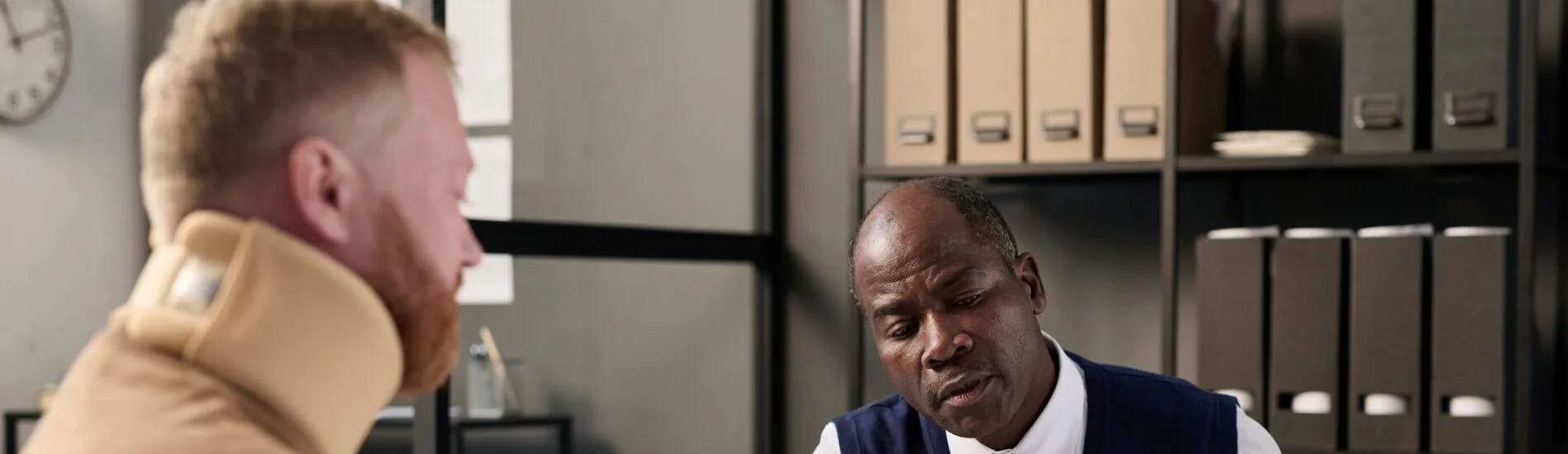
Negligence in a Pennsylvania personal injury claim is when a party fails to uphold the standard of care needed to avoid harming another person. Read on to understand what negligence in a personal injury claim entails and how your personal injury lawyer in Philadelphia can prove negligence in a personal injury claim.
Understanding Negligence in a Personal Injury Claim
It’s easier to understand negligence in a personal injury claim in the context of factual scenarios. The below three examples illustrate how personal injury claims can arise in the real world, but this list is by no means exhaustive. There are various other scenarios in which someone’s negligence can cause personal injuries.
Premises Liability
Let’s say there is an area of rotted wood on the floor of a commercial store. The floor had been rotted for months, with notice to the owner, due to water damage and a severe termite problem. A customer is standing in line and all of the sudden, the wood floor buckles and the customer falls through a hole caused by the rotted wood, onto the concrete basement floor below. The customer breaks both legs and suffers a serious spinal injury resulting in paraplegia. The customer will now be wheelchair-bound for the rest of their life. The store was negligent and could be held liable for the customer’s injuries.
Workplace Accidents
Construction sites can be dangerous places to work. Whether it’s running a power saw, climbing high platforms, or operating loud equipment, workplace accidents can result in serious injuries. For instance, a forklift operator may be lifting a large object which obstructs their view and they drive the forklift into a construction worker walking on the road below. The forklift operator was negligent in their operation of the machine and for failing to clear the area before advancing. It’s possible there are other negligent parties, for instance, if the forklift wasn’t functioning as expected and/or designed and/or manufactured.
Medical Malpractice
A doctor or other medical professional may be negligent for personal injury to a patient in the context of, for example, the emergency room. Imagine a patient going to the emergency room with symptoms of heart attack and the staff fails to treat them urgently. The staff allows the patient to suffer in the waiting room and by the time they call the patient’s name, it’s too late: The patient has died of a heart attack. The emergency room staff are negligent for failing to provide the patient with proper, timely care.
Proving Negligence in a Personal Injury Claim
In order to prove negligence in a Philadelphia personal injury claim, the Pennsylvania personal injury attorney will have to prove four essential elements:
- Duty of Care
To prove this element, the personal injury attorney in Philadelphia will have to prove that the defendant had a legal obligation to the injured person to act with the reasonable caution that others in a similar situation would use. In the rotted floor example, the store had a duty to exercise reasonable caution in making sure the store was safe for customers.
- Breach of Duty of Care
A breach of the duty of care is the failure of the defendant to exercise the reasonable caution described above. By failing to repair the rotted floor, the store breached their duty to keep customers safe from foreseeable harm.
- Causation
To prove causation, your Philadelphia personal injury lawyer will have to prove that the injuries would not have occurred if it weren’t for the defendant’s actions. In the workplace accident example, the pedestrian construction worker’s injuries would not have occurred if it weren’t for the forklift operator striking him.
- Damages
The last element must establish that the victim suffered injuries as the result of the defendant’s actions or inactions. In the medical malpractice example, the patient suffered from heart attack symptoms and then died. Their spouse and children may also be able to prove damages, such as loss of consortium, loss of financial support, loss of affection and companionship, loss of guidance, etc.
If you or a loved one suffered injuries as the result of the negligence of another person or professional, contact the experienced personal injury lawyers at VSCP Law.
